Blog
Is Your Madison Garage Door Worth Fixing, or Done
Madison homes mostly date 1976-2012, median 1993 - here's when a door from that era is worth repairing versus replacing, and what the cold-moderate climate does to it.
What Changes With the Season
Most houses in Madison went up between 1976 and 2012, with the median build year sitting at 1993. Across the twelve named areas we work - from the neighborhoods near Redstone Arsenal out toward Hazel Green and Moores Mill - that means a lot of doors are hitting the thirty-year mark on original springs and hardware. Thirty years ago, a 1993-built house likely got a steel door on a standard torsion spring rated for that era's panel weight. That spring doesn't fail on a schedule; it fails on cycle count, and a door opened twice a day for three decades is well into the range where the coil is tired, not just old. Spring season for us isn't a calendar month, it's a build-year bracket. If your house falls in that 1980s-90s stretch that makes up most of the local stock, the question isn't whether the spring will go, it's whether the rest of the door is worth the new spring. A door with a solid steel skin and working panels from that window is almost always worth fixing. A door with rust-through on the bottom panel or a bent track from the same era usually isn't.
What the Weather Here Does to It
This area sits in a cold-moderate climate band, not the deep freeze further north and not the humid extreme further south. That matters for what actually wears out on a 1990s-era door. You don't get the ice-dam damage that cracks seals in colder zones, but you do get enough freeze-thaw cycling through winter to work moisture into any gap in weatherstripping or a cracked bottom seal, and enough summer heat swing to stress steel panels that have already spent twenty-plus years expanding and contracting. On an older door, that cycling finds the weak point first - usually the bottom seal, then the hinges, then the spring. None of that is catastrophic on its own. What it tells you is that a door from the median 1993 build year has likely absorbed three decades of this moderate but constant push-pull, and the parts most worth checking before you decide to replace are the ones that take that stress directly: seals, hinges, and the spring.
When to Call Someone
Call when the door is noisy in a way it wasn't six months ago, when it hesitates partway up, or when one side visibly sags before the other. On a door from the 1980s-90s stock that makes up most of this area, those symptoms usually point to a spring losing tension unevenly or a cable fraying on one side - both fixable, both cheaper than a new door, as long as the panels and track underneath are still sound. Don't wait until the door won't open at all; a spring that lets go under load can take a cable or a panel with it, which turns a $200 repair into a $1,200 one. We're honest about the limit here: if the door has already dropped fully and won't budge, or if a panel is bent badly enough that the roller track no longer sits straight, that's not a same-day fix - parts for some of the older panel profiles take time to source, and we'll tell you that up front instead of promising a quick patch.
The Problem
The real issue with a lot of doors in this area isn't age by itself - it's that a door built in, say, 1993 was engineered for the spring and opener technology of that year, and homeowners often patch one failed part with a mismatched replacement over time. We see torsion springs swapped for the wrong wind direction, openers bolted onto track that was never meant to carry that duty cycle, that kind of thing. With median household income here at $91,842 across roughly 15,800 households, most owners in this area can afford to replace rather than nurse along a door that's been patched past the point of sense - but plenty of doors from the 1976-2012 build window are still structurally fine and just need the spring, cable, or seal replaced properly, matched to the original hardware. The honest answer is almost always specific to what's actually on your garage, not to the year on the permit.
Questions
Common questions
My house was built in the early 1990s - is the door original?
It's possible. A lot of Madison houses date to that era, and plenty of original steel doors from the 1980s-90s stock are still in decent shape structurally even if the spring or opener has been swapped once or twice. We'd need to look at the panel condition and hardware to say for sure.
Is it worth fixing a 25-30 year old garage door?
Usually yes, if the panels aren't rusted through or bent and the track is still straight. The spring, cable, and seals are the parts that wear out on that timeline, and all three are repairable without replacing the door itself.
Does the climate here cause specific garage door problems?
The cold-moderate band this area sits in means freeze-thaw cycling through winter and heat swings in summer, both of which stress bottom seals, hinges, and springs over time rather than causing sudden failures like you'd see in a harsher climate.
When should I stop repairing and just replace the door?
When the panels are bent badly enough that the roller track won't sit straight, or when the door has dropped fully and parts for that older panel profile are hard to source. At that point a repair is a temporary patch, not a fix.
Recommendation
You Might Also Like
More garage door guides for Madison homeowners.
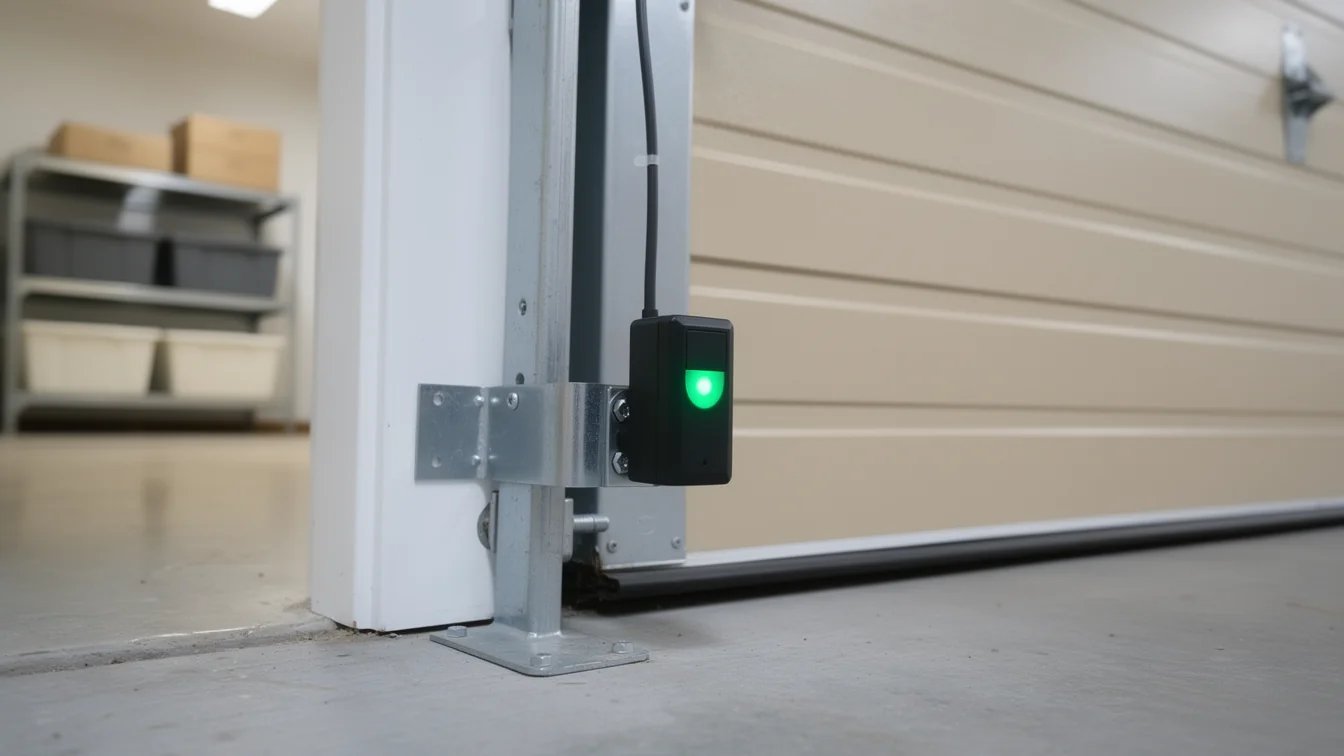 What the Seasons Do to a Madison Garage Door
Most Madison houses went up between 1976 and 2012.
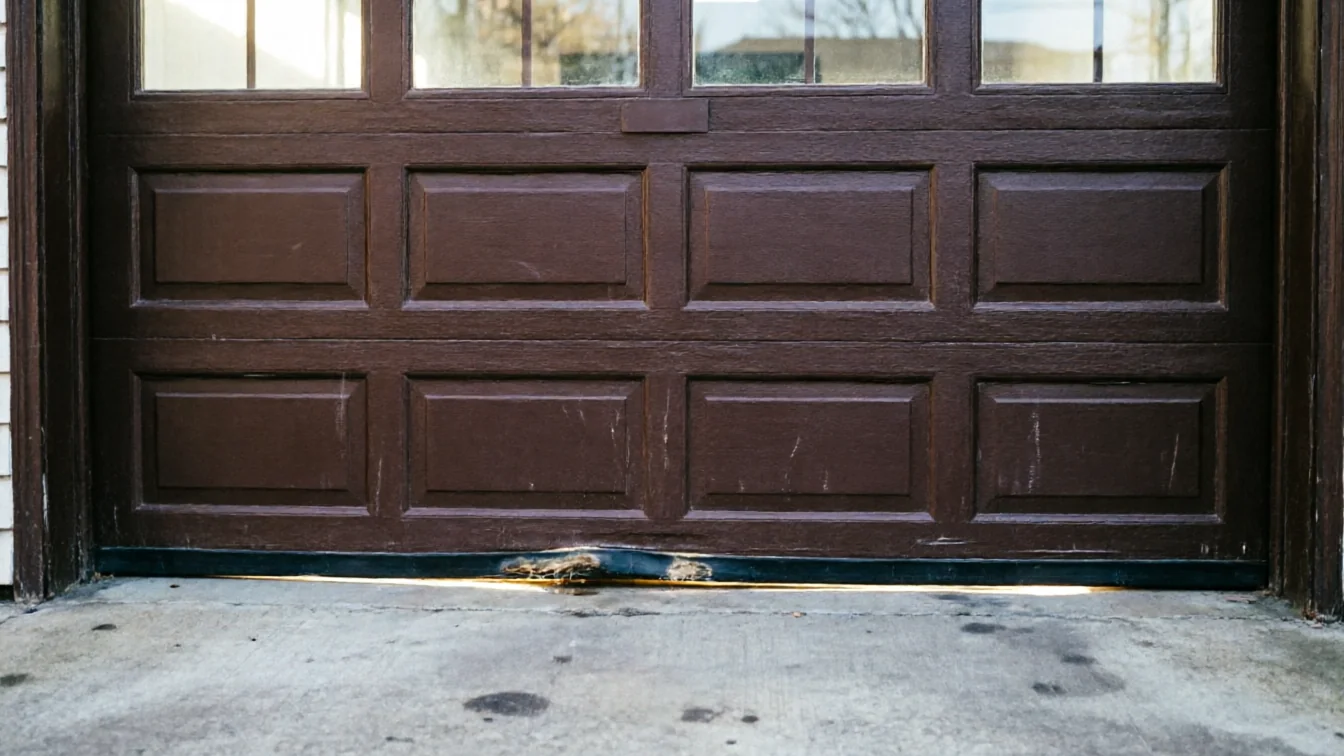 Here's What Happens When We Come Out to Your Door
A plain look at what a Madison Garage Door Co.
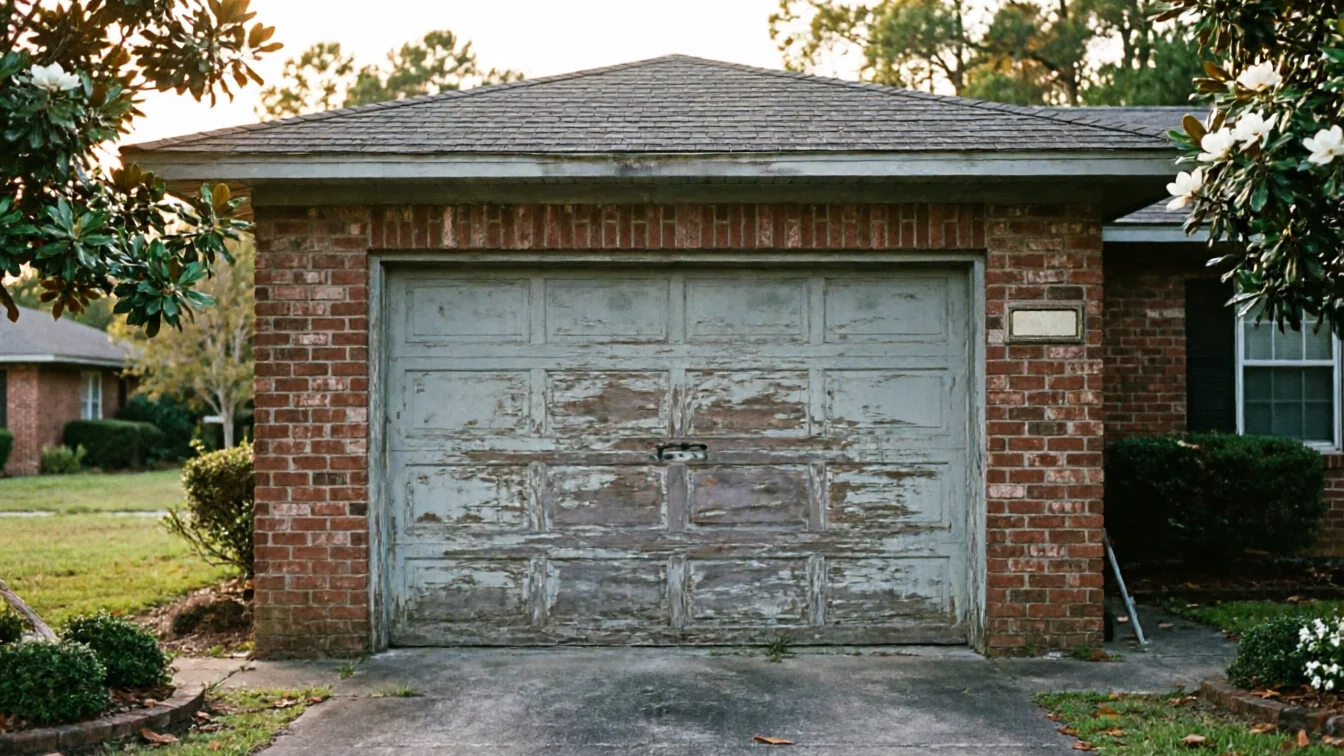 Openers, Power Cuts, and Madison's Aging Housing Stock
Why Madison's 1980s-2000s housing stock means openers without battery backup, and what a cold-weather power cut actually does to your garage door.
Ready when you are
Need a garage door sorted in Madison?
Madison Garage Door Co repairs and installs garage doors, springs and openers in Madison, AL and the surrounding area.