Surrounding housing age
Most of the surrounding area's housing dates to the 1980s and 90s, with older chain-drive openers and the mechanical fatigue that comes with 30-plus years of use. Harvest skews younger.
Harvest, Madison
Opener repair for Harvest homes built mostly since 2004, with the circuit board and sensor faults that come with newer construction. Service from Madison, 10 miles out.
Job timing
Harvest's median household income sits at $99,542, noticeably higher than the $91,842 median across the wider Madison service area. That number matters here because it tends to track with newer construction, and Harvest backs that up: the median year built in this pocket is 2004, well inside the 1976-2012 range that covers the service area overall, but on the newer end of it.
Most of the surrounding area's housing dates to the 1980s and 90s, with older chain-drive openers and the mechanical fatigue that comes with 30-plus years of use. Harvest skews younger.
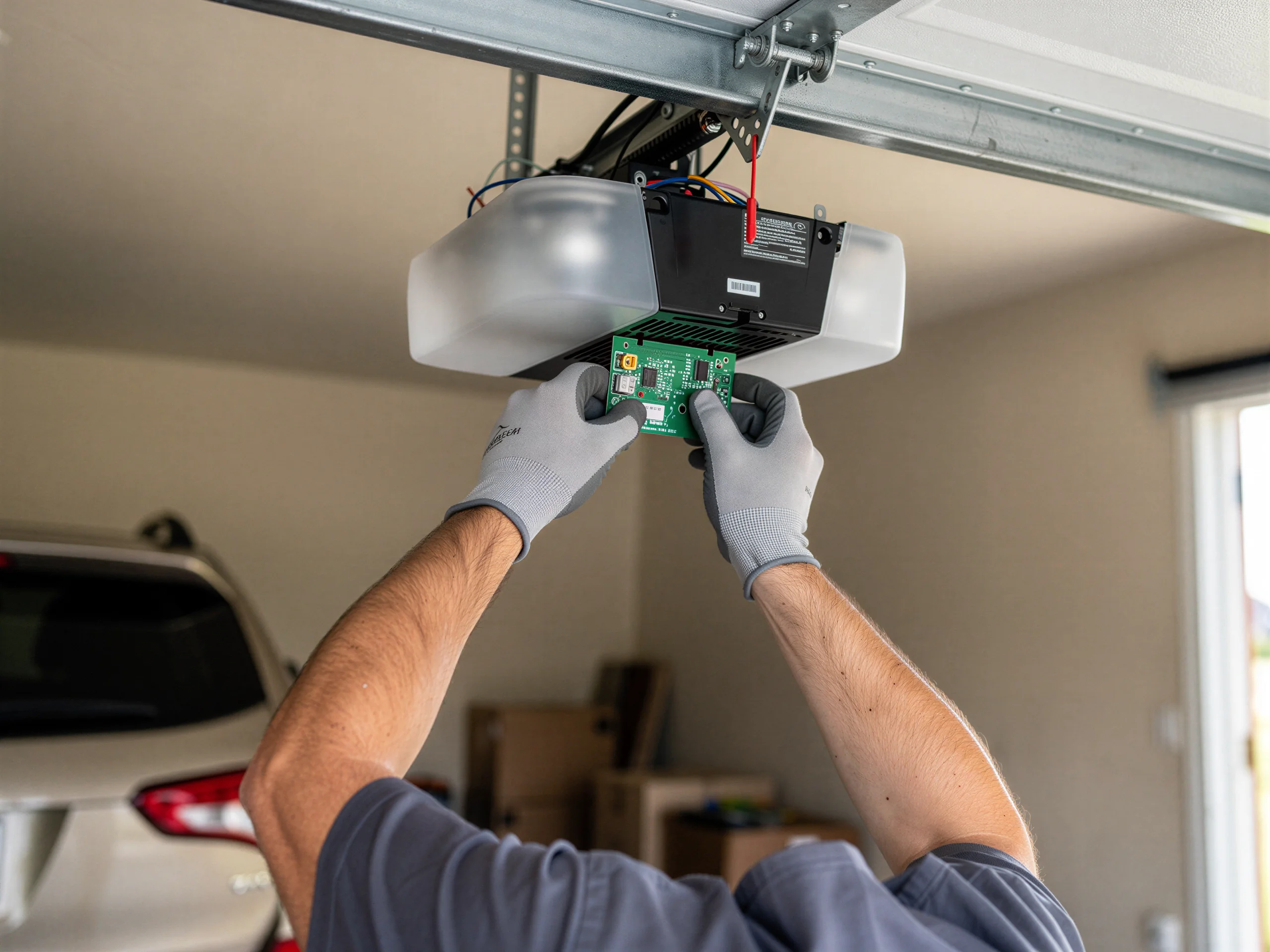
The openers we get called out for here are mostly 15 to 20 years old now, which is right where circuit boards, logic boards, and receiver units start failing even though the motor and drive system still have life left.
We're coming from Madison, about 10 miles away, so this isn't a walk-up call - it's a scheduled trip, and we plan the parts we bring based on what a 2004-era opener actually breaks.
DIY or pro
Some of what goes wrong on a newer opener you can rule out yourself before calling anyone. If the door won't respond to the wall button or remote, check that the unit is plugged in and that nothing tripped the outlet's breaker or GFCI.
Swap the remote battery. Check that the safety sensors at the bottom of the track are lined up and the little lights on them are solid, not blinking - a sensor knocked out of alignment is the single most common no-start complaint we hear and it costs nothing to fix.
What you shouldn't open up yourself is the opener's logic board or the motor housing. Winters here get cold enough that condensation inside a housing can corrode contacts over a season, and chasing that kind of fault without a meter usually means more guessing than fixing.
If the door moves partway and reverses, or the opener runs but the carriage doesn't engage the chain or belt, that's a drivetrain or circuit issue, not a battery issue, and it's worth a call before you start removing covers.
On the truck
Our truck carries the parts that fail across the service area's typical housing stock - gears, sprockets, standard sensor pairs, common remotes. Harvest's newer opener models complicate that a little. A 2004-built house with its original opener is old enough that the unit has likely been replaced once already, which means we're often working on a second-generation opener with electronics that differ from the chain-drive units common in the older 1980s and 90s stock nearby. We stock the boards and sensors that cover most of what's out there, but a specific logic board for a less common model can mean a short order delay rather than a same-visit fix. We'll tell you straight if that's the case rather than installing something that's close enough but not right.
The repair
At $99,542 median household income, the math on opener repair versus replacement usually favors repair, and it favors it more in Harvest than in older pockets of the service area.
A house built around 2004 has a door and track that are still structurally sound - there's no reason to replace the whole system because the opener's circuit board burned out.
Repairing or swapping just the opener unit is a fraction of what a full door-and-opener replacement runs, and for a household at this income level, that's usually the sensible call rather than a stretch.
Where it tips the other way is if the opener itself is the original from 2004 and the motor is going along with the board - at that point you're paying for a repair on a unit that's going to need the next part replaced within a year or two anyway, and a new opener makes more sense. We'll look at what's actually failing before we tell you which side of that line you're on.
Questions
Almost always a sensor alignment issue. The two sensors at the base of the track have to be pointed exactly at each other; if one's been bumped, even slightly, the opener reads it as an obstruction and reverses. Check that both lights are solid and not blinking. If they're aligned and it still reverses, the circuit board's close-limit setting may need adjusting.
Depends what's failing. If it's a sensor, remote, or minor wiring issue, repair makes sense - the motor and drive still have life. If the motor itself is going along with the board, you're looking at a cascade of parts failures, and a new opener usually costs less over the next couple of years than repeated repairs.
No - we run out of Madison, about 10 miles from Harvest, and bring the parts for your job based on what you tell us when you call. Most common opener parts are on the truck; less common circuit boards for specific models sometimes need a short order.
Explore more
Ready when you are
Madison Garage Door Co repairs and installs garage doors, springs and openers in Madison, AL and the surrounding area.